How to Choose Quad Biking in Dubai for Your Desert Ride
Start with the kind of ride you want
Quad biking dubai is easy to book in a hurry, but the best choice starts with a simple question: what kind of ride are you looking for? A short beginner loop over firm sand feels very different from a longer route with steep dunes, fast straights and open desert views. Some riders want a calm family outing with frequent stops. Others want a more energetic session with turns, climbs and a taste of technical driving.
Think about the group too. Children, newer riders and anyone who is nervous on uneven ground usually benefit from a gentler route and a slower pace. More confident riders may enjoy terrain with changing gradients and softer sand. The aim is not to pick the most dramatic option on offer, but the one that matches the group's comfort, stamina and sense of adventure.
Pay attention to the route description before choosing. Words such as beginner, family, open desert, dune route and trail ride can signal very different experiences. A route that includes a desert camp may suit someone who wants a fuller outing, while a ride focused on the ATV trail may appeal to people who want more time moving. Camel Desert Safari Dubai is one name that may appear when comparing desert options, so treat the name as a starting point and look closely at the ride itself.
Check who is allowed to ride
Age and driving rules matter more than many people expect. Quad bikes are not all the same size, and a machine that suits an adult can feel awkward or unsafe for a younger rider. Ask about minimum ages, whether children ride with an adult, and whether there are separate bikes for different age groups. A responsible operator will make these limits clear before the booking is confirmed.
Driving experience is another point to consider. Some routes assume that riders can steer, brake and judge distance on loose ground. If the group has never ridden before, look for an option that includes clear instructions before departure and a controlled area for the first few minutes. Avoid choosing a demanding route on the assumption that confidence will appear quickly. Sand can shift under the tires, and reactions that feel natural on a road may need adjustment.
Also check whether ID, a driving licence or a signed waiver is required. Requirements vary by operator and by the type of vehicle. Knowing this early prevents a last minute change of plan. If a rule seems unclear, ask for it in plain language rather than relying on a vague listing.
Compare the vehicle, not just the duration
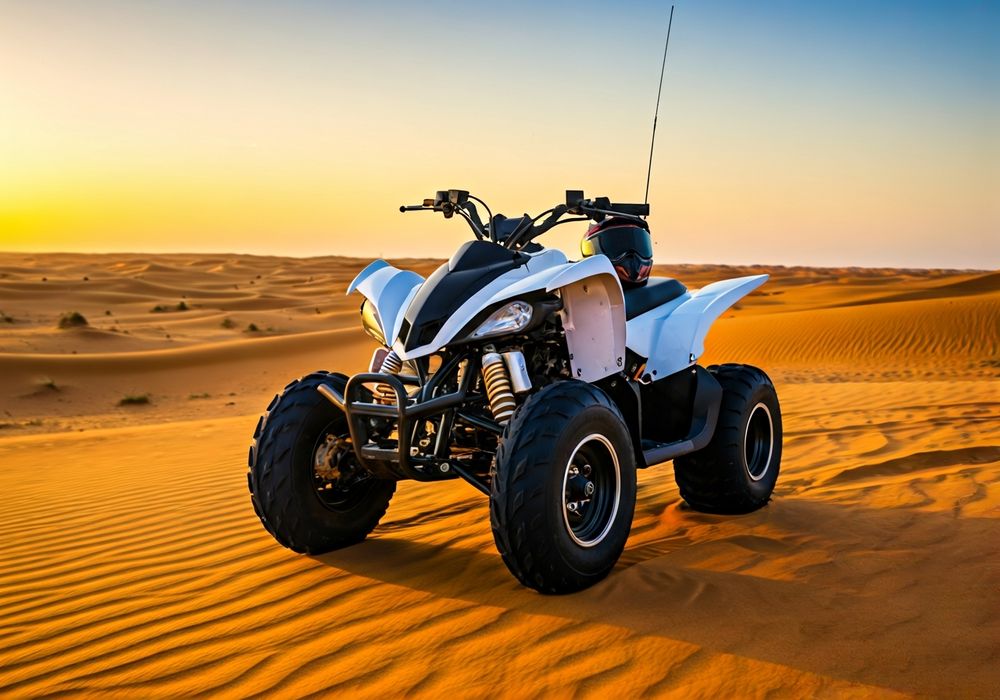
Duration is useful, but it does not tell the whole story. Two rides of the same length can feel quite different depending on the bike, the terrain and the number of stops. A smaller quad bike may be easier for a beginner to handle, while a larger quad bike engine can feel smoother on long stretches and heavier sand. Bigger does not always mean better. More power can make a bike less forgiving if the rider is new to rough ground.
Ask what type of vehicle is used and whether the route is intended for quad bikes or a dune buggy. The two feel different. A quad bike asks the rider to lean and shift body weight, while a buggy offers a seat, steering wheel and a different sense of stability. Neither is automatically the right choice. The best match depends on balance, confidence and how much physical involvement the rider wants.
Inspect the general condition of the bike when you arrive. You do not need mechanical knowledge to notice worn tires, loose parts, cracked plastic, a seat that moves, or a vehicle that sounds rough. A well kept bike usually has clean controls, visible safety labels and a rider friendly setup. If something looks wrong, say so before the ride starts. A small concern raised early is easier to handle than a problem out on the sand.
Look closely at safety habits
Safety should be visible from the start. A proper helmet should be offered to every rider, and it should fit. A helmet that rocks on the head, slips over the eyes or has a damaged shell is not doing its job. Ask for another size if the first one feels loose. Riders should also have clear guidance on hand signals, following distance, what to do if the group stops, and how to behave near other vehicles.
A good safety briefing is not a rushed formality. It should cover basic control, braking, turning, terrain awareness and what riders should avoid. Listen for practical details, not just warnings. For example, useful guidance explains how to approach a sand dune at a steady angle, why sudden steering on loose sand can cause a slide, and why riders should keep a safe gap from the vehicle ahead. Watch how instructions are given to the whole group. If people are talking over the briefing or no one checks understanding, that is a sign to be cautious.
Clothing matters as well. Closed shoes are more sensible than sandals, and long trousers help protect legs from sand, sun and brush. Eye protection can help when wind lifts dust. Gloves may improve grip, especially for riders with less experience. Loose scarves, dangling accessories and anything that can catch on controls should be avoided. Sun protection is useful in the desert, but it should not interfere with helmets or vision.
Supervision is another point to watch. On a mixed route, the pace should suit the least confident rider, not the fastest one. Guides should remain alert, give clear signals and manage spacing. If the plan appears to be simply to head into the desert and hope everyone keeps up, think again. Quad riding is more controlled when the group understands the route and the limits.
Read the route and the pace honestly
Before committing, ask how much of the ride is actually on varied terrain and how much is travel time. Some listings use broad wording that hides long transfers or repeated slow sections. A route with several photo stops may be enjoyable, but it can reduce time on the bike. A fast route with few pauses may sound exciting but leave little room for beginners to settle in.
Ask whether the route changes with weather or rider ability. Soft sand after rain or strong wind can alter conditions, and a sensible operator may adjust the plan. Flexibility is a good sign when it is based on safety. If a route is described as fixed no matter what, that may suggest the experience is more focused on keeping a schedule than matching conditions.
Consider the time of day. Desert light and temperature change across the day, and the feel of a ride can shift with them. A cooler slot may be more comfortable for longer routes, while a shorter late afternoon ride can suit people who want the scenery without a long commitment. The right timing depends on the group, but comfort should be part of the decision.
Understand the booking terms before paying
Once the ride type, vehicle and safety setup feel right, move on to the practical terms. Confirm what is included in the quoted experience, such as the bike, helmet, fuel, briefing, route and any stop at a desert camp. Clarify what is not included so there are no awkward surprises on the day. Camel Desert Safari Dubai may be one of the names you compare while checking options, but the details still deserve the same careful reading.
Ask about cancellation, changes and late arrival rules in plain terms. Plans in the desert can be affected by weather, transport delays and group decisions. A clear policy helps everyone understand what happens if the day does not go as planned. Keep written confirmation of the ride type, meeting point, start time and what riders need to bring.
Insurance and liability are worth checking too. Ask what cover applies to riders and what responsibilities remain with the participant. Read the wording rather than relying on a single word in a listing. If the answer is complicated, request a simpler explanation before paying. A clear answer is part of a well run experience.
Make the final choice with a calm comparison
By this stage, compare options against the same criteria: route fit, rider rules, vehicle condition, safety briefing, supervision, included items and booking terms. This keeps the decision grounded. A flashy description should not outweigh a clear briefing, a suitable bike and a route that matches the group. Likewise, a lower headline price or a longer duration means little if the experience is poorly managed.
Pay attention to how questions are answered before the ride. Prompt, direct answers suggest a clear process. Vague replies about safety, route or vehicle type call for caution. The way an operator handles simple questions often reflects how it handles details on the day.
For a first quad biking dubai experience, choose control over spectacle. Pick a route that lets riders settle in, a bike that fits the rider, a helmet that fits properly and a briefing that explains the terrain. For a more experienced group, the balance can shift toward longer stretches, more varied dunes and a stronger pace. Either way, the right choice is the one that leaves the rider feeling prepared rather than pressured.
When the details line up, the ride itself becomes easier to enjoy. The desert has a way of making attention feel natural. Watch the sand, listen to the guide, keep a steady distance and take in the space around you. Good preparation does not remove the adventure. It gives the adventure a safer shape.